

Bookings
Simple table bookings with real-time availability.

A complete restaurant ordering and diary system designed to give venues great service with less friction. Mobile app for guests with bookings, menus, rewards and venue events, with a powerful web-based back office for staff.
Simple table bookings with real-time availability.
Browse dishes and check what’s available.
Keep customer loyalty and rewards connected.
Tools for managing day-to-day venue operations.
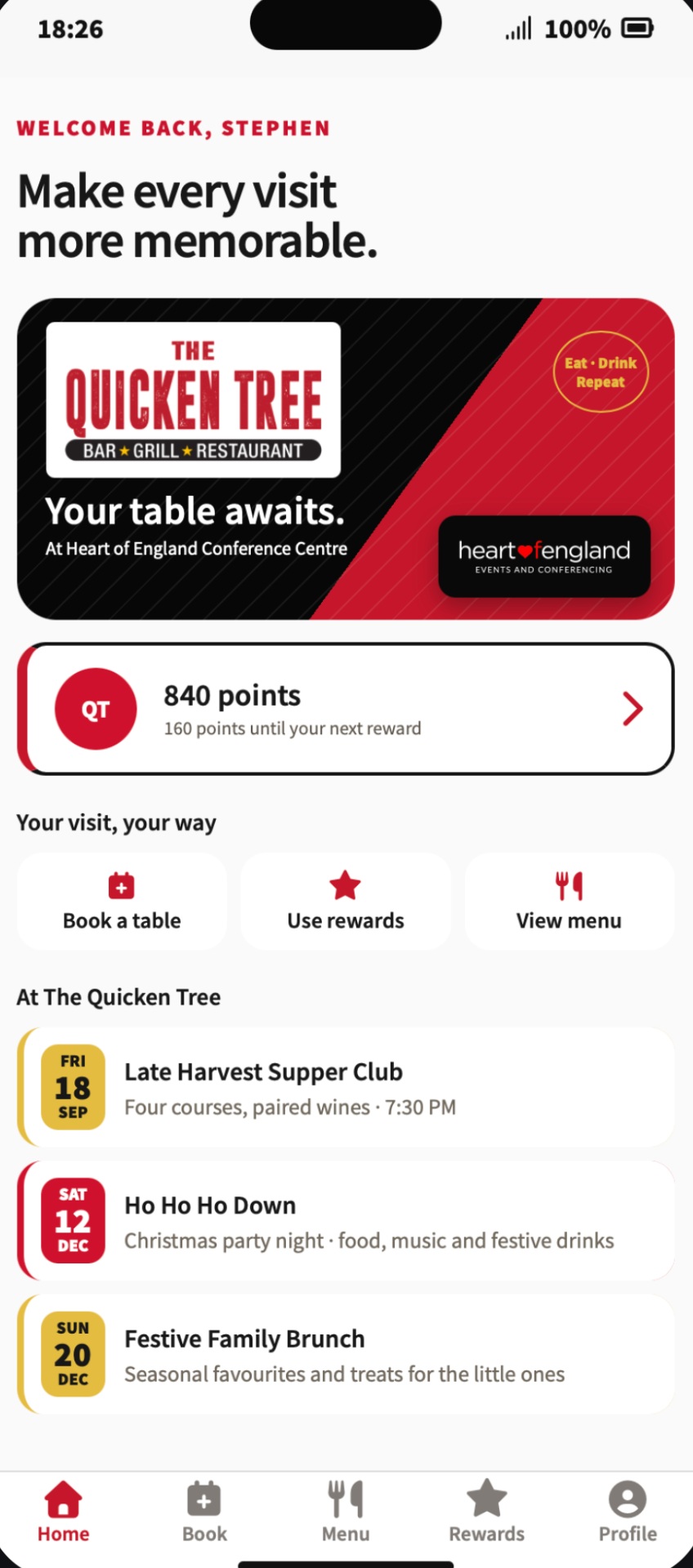
The mobile experience keeps bookings, menus, venue events and loyalty points within easy reach. Pace also provides an accompanying management platform for venue operations.
The images shown here are taken from the actual Pace website and guest application.
Explore Pace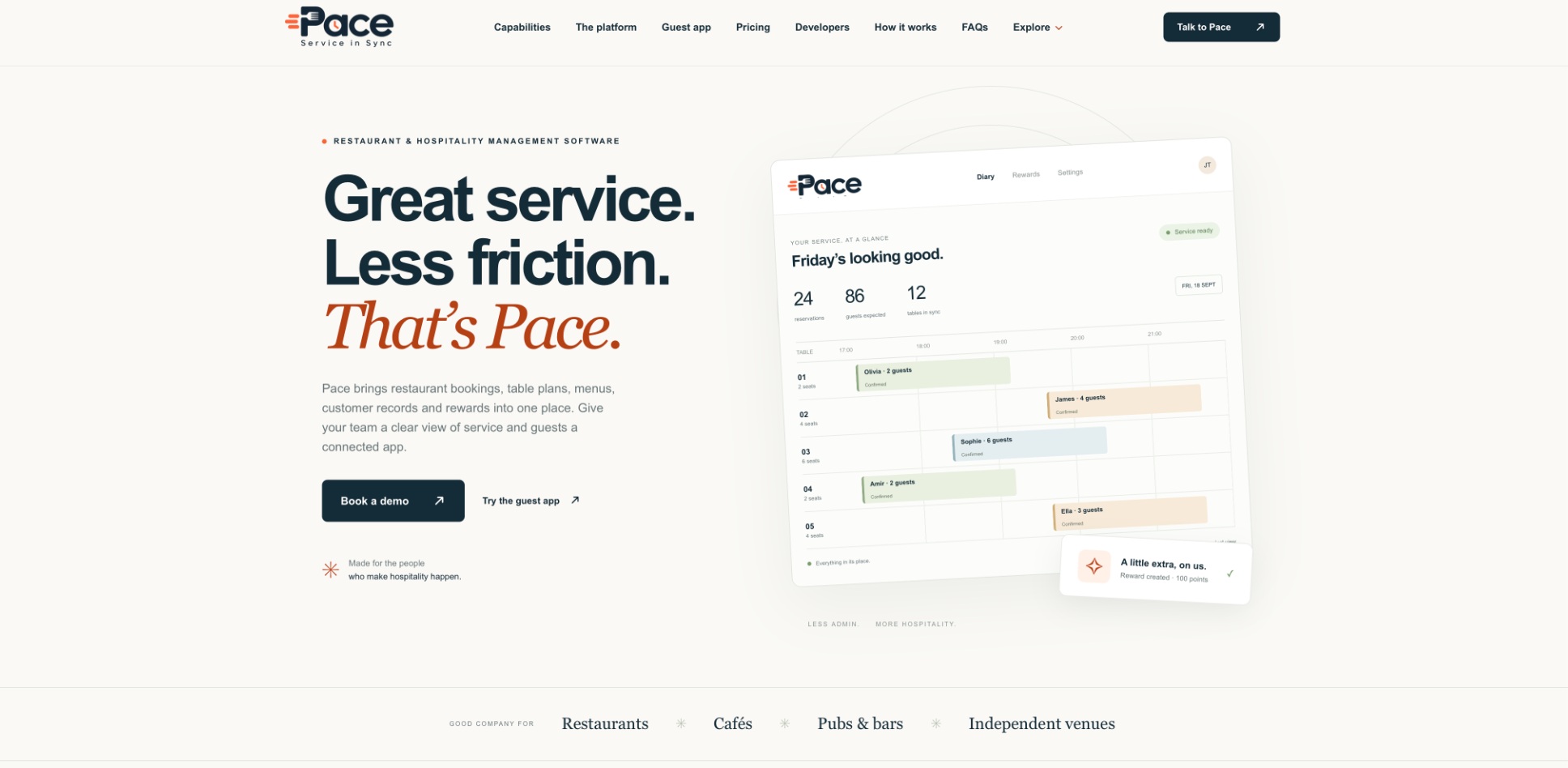
Pace is designed around the complete hospitality workflow: a simple guest experience on one side and the operational tools a venue needs on the other.
Bookings, menus, rewards and venue information brought together in a customer-facing mobile experience.
A web-based back office for the people managing availability, content, bookings and day-to-day venue information.
The platform is architected so venues can have distinct data, configuration and branded experiences while sharing a maintainable product foundation.
APIs, authentication, notifications and reward mechanics create the connective layer between the guest product and the tools behind it.
Pace is more than a mobile interface. The product connects customer journeys with the data, configuration and operational tools needed to keep them accurate.
Guests can move from venue information into practical booking journeys without leaving the wider branded experience.
Menu sections, dishes and availability sit behind a guest-facing experience that can stay current as venue information changes.
Reward mechanics and QR interactions create a repeat-use reason for the customer relationship to continue beyond one visit.
Staff-facing tools manage bookings, hours, menu content and the operational information that powers the guest product.
Venue data and configuration can remain distinct while the platform shares a maintainable product and engineering foundation.
The architecture supports individually branded venue experiences without turning each customer into an entirely separate software product.
Pace combines a guest-facing mobile application with operational tools for venues. The booking, menu and rewards journeys illustrate the value of looking beyond a single screen and considering the wider product workflow.
The strongest part of Pace is the relationship between the guest experience and the operational product behind it. Bookings, menus, rewards and venue information only stay useful when the management layer can keep the underlying data current.
A concise view of how the finished product is shaped. The result statements describe the product shown here, not unsupported commercial metrics.
Bookings, menus, rewards and venue information only work as a coherent customer experience when venue teams can keep the operational data behind them current.
The guest experience and staff-facing back office were treated as connected parts of the same service rather than separate projects.
Mobile experiences, a product API, tenant-specific venue data and back-office tooling sit on a reusable foundation with authentication, notifications and reward mechanics.
Guests and venue teams need different interfaces, but bookings, menu information, availability and rewards depend on the same product rules and data.
The result is a guest-facing application for bookings, menus, rewards and venue information, supported by operational tools for venue teams.
Bookings, menus, venue information and rewards live within the same guest-facing product rather than becoming separate digital touchpoints.
Venue teams need practical control over bookings, hours, menu content and the information that powers the customer-facing product.
Tenant-specific data and configuration can remain distinct while the underlying product stays maintainable and reusable.
Authentication, APIs, notifications and reward mechanics form the connective layer between guest journeys and operational tooling.
A practical view of the decisions behind the finished work, based on what is shown in this case study.
Treat the guest journey and venue operations as one connected problem so customer-facing promises can be supported operationally.
Shape distinct guest and staff experiences around the same underlying information, rules and service model.
Bookings, menus, rewards and venue information need clear routes for guests while operational tools stay practical for venue teams.
Multi-tenant configuration, APIs, authentication, notifications and reward mechanics provide the shared layer behind branded venue experiences.
Concrete product, interface or system decisions shown in the case study — without invented performance claims.
Bookings, menus, venue information and rewards are presented as one connected customer experience.
Venue teams have a separate management layer for the information and workflows behind the guest product.
The product is structured so multiple venue experiences can sit on a maintainable common foundation.
What this demonstrates: Pace demonstrates the kind of product thinking Kinetic Axis brings to hospitality work: design the guest journey and the operational workflow as one system.