

World Design
A recognisable visual direction for a near-future setting.

A futuristic first-person shooter experience with a distinctive sci-fi world, weapon and interface design, plus an atmospheric companion website.
A recognisable visual direction for a near-future setting.
HUD elements designed for an immersive experience.
Gameplay ideas and in-world interactions.
An atmospheric destination for the VX-27 universe.
VX-27 explores the visual language of a near-future shooter: clinical environments, tactical equipment, interactive systems and a clear first-person interface.
The accompanying website carries the same atmosphere beyond the game, introducing visitors to the exclusion zone. The website screenshot below is taken from the actual VX-27 site.
Visit VX-27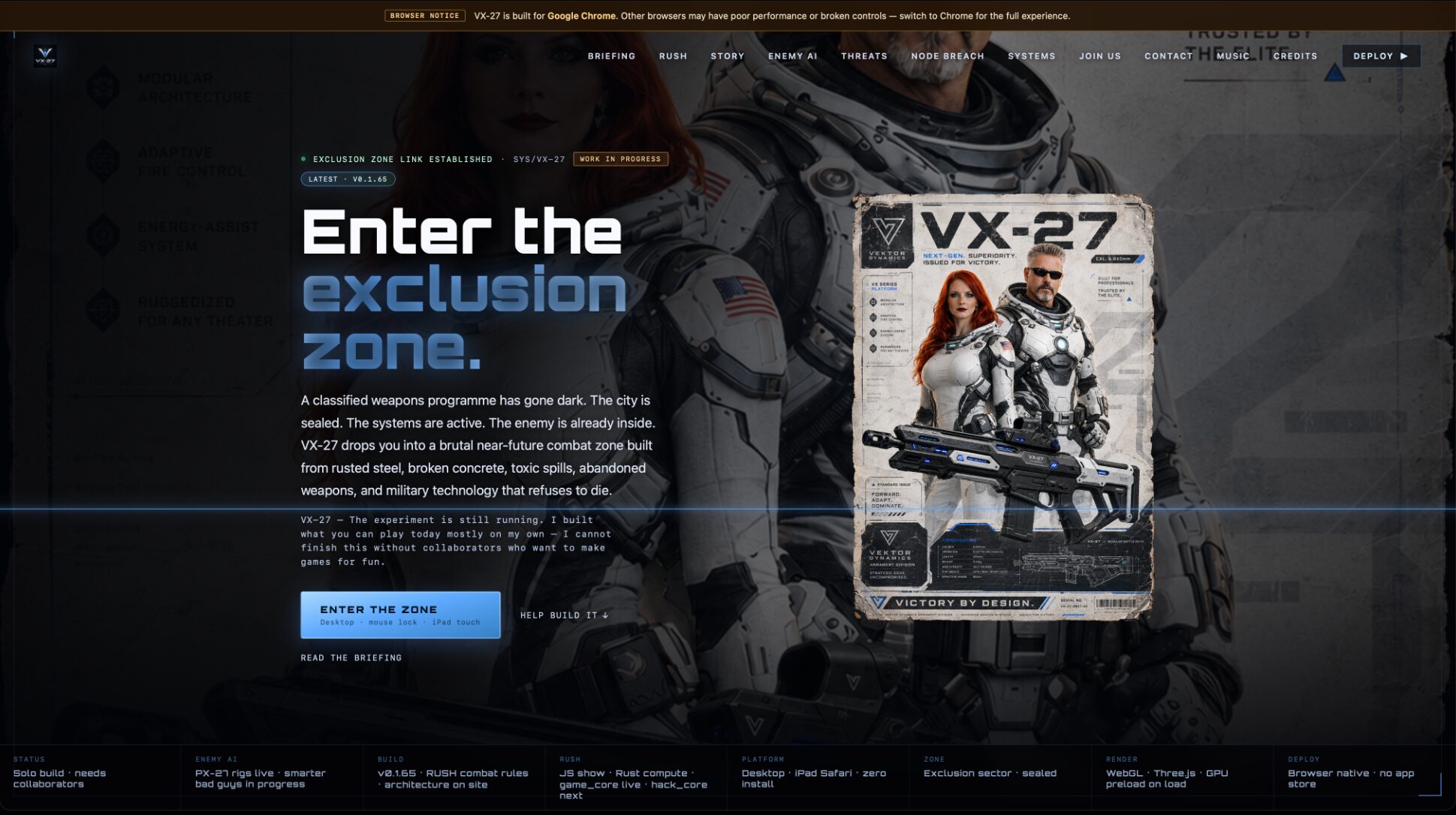
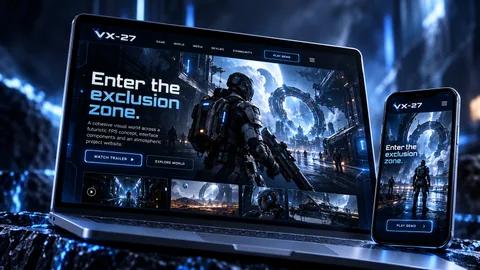
VX-27 uses its sci-fi world as the foundation for interface, game experience and a companion website. It demonstrates how visual direction can remain consistent across different types of digital touchpoint.
VX-27 explores a near-future shooter as a connected experience. Environment direction, tactical assets, HUD concepts, interactive systems and the companion website all draw from the same clinical sci-fi identity.
A concise view of how the finished product is shaped. The result statements describe the product shown here, not unsupported commercial metrics.
Environment art, tactical assets, HUD concepts, interactive systems and a companion website all need to feel as though they belong to the same near-future world.
A clinical sci-fi visual language provides a common reference for environment, equipment, interface and supporting digital material.
The experience is organised across environmental assets, first-person UI, in-world systems and the companion web presence while keeping the same visual logic.
HUD and interaction concepts are designed as part of the world rather than as an unrelated visual overlay, and the web experience extends the same atmosphere.
The result is a consistent design language spanning game-world concepts, interface elements, interaction ideas and an atmospheric project website.
Clinical architecture, tactical equipment and near-future materials establish the visual rules of the exclusion zone.
Game-interface concepts are designed to support the first-person experience without feeling disconnected from the wider visual direction.
Hacking and other in-world interaction ideas extend the identity beyond static scenery and weapons.
The companion website carries the same world and tone into a separate digital touchpoint.
A practical view of the decisions behind the finished work, based on what is shown in this case study.
Define a clinical near-future visual language that can guide environments, tactical assets, interfaces and supporting digital material.
HUD concepts, tactical equipment and in-world systems need to feel like parts of the same fictional technology rather than separate assets.
First-person interface and hacking concepts extend the world through interaction as well as scenery.
The companion web experience uses the same visual direction so the project remains recognisable across different touchpoints.
Concrete product, interface or system decisions shown in the case study — without invented performance claims.
The project establishes a consistent near-future visual language across environments and tactical assets.
Interface elements are designed as part of the first-person experience rather than as a separate visual layer.
Hacking and in-world interaction concepts extend the design language beyond static assets.
What this demonstrates: VX-27 is a useful example of consistency across different interaction contexts: game, interface, asset design and web experience.