INTERNAL BUSINESS SYSTEMS
Internal software built around how the business actually works.
Bring operational workflows, permissions, data and day-to-day actions into a system designed around the people doing the work — rather than forcing the work around a generic tool.
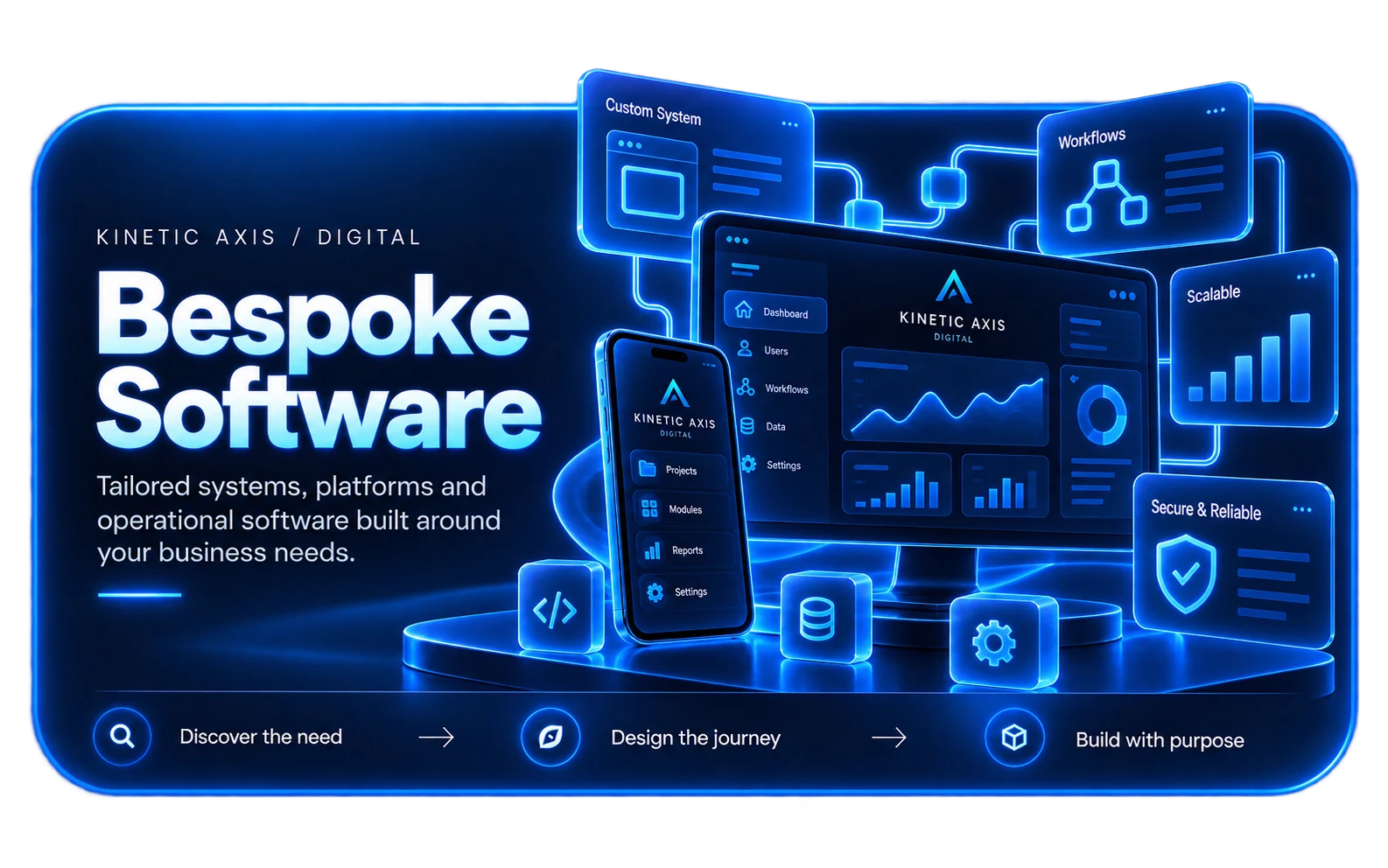
SOFTWARE FOR THE INSIDE OF THE BUSINESS
Internal tools deserve the same product thinking as customer-facing software.
Spreadsheets, inboxes and disconnected SaaS products can carry a process surprisingly far. The friction appears when people need the same information, permissions become important or nobody can see the full state of a workflow.
We design internal systems around the decisions staff make, the data they need and the exceptions they have to resolve. The result can be simpler than a large off-the-shelf platform because it only needs to solve the problem your organisation actually has.
How we design and buildSYSTEM CAPABILITIES
The operational pieces that usually matter most.
The right internal system makes routine work easier without hiding the controls needed for unusual cases.
Roles & permissions
Give teams the actions and information they need without exposing every control to every user.
Workflow & status
Make ownership, progress, hand-offs and exceptions visible instead of relying on inbox memory.
Data & search
Keep operational records structured, searchable and connected to the actions people take.
Reporting & oversight
Surface useful operational measures and queues without forcing teams to rebuild reports manually.
WHEN IT FITS
Good candidates for a purpose-built internal system.
Custom internal software makes most sense where the workflow itself is important to how the business operates.
Operations platforms
Coordinate repeat work across teams, locations or customer accounts with clear ownership and status.
Case management
Keep records, communication, decisions and supporting information together around a case or request.
Back-office administration
Manage customers, products, bookings, content, configuration or other data that powers customer experiences.
Process replacement
Replace fragile spreadsheet-and-email processes with a controlled application and a clear source of truth.
HOW WE APPROACH IT
Make the workflow clear before the software gets complicated.
We start with users, operations and outcomes, then design the smallest coherent system that can grow with the business.
Understand the workflow
Map users, decisions, data, hand-offs and exceptions before deciding what the software should look like.
Define the product shape
Separate the core outcome from useful extras so the first release is coherent rather than over-scoped.
Design and integrate
Build the interface, data model and integrations together so the product behaves as one system.
Release and evolve
Use real operation and customer feedback to decide what should be improved, automated or expanded next.
RELEVANT WORK
Experience behind the recommendation.
Selected work showing the same kind of product, workflow or platform thinking in practice.

RELATED EXPERTISE
Connected problems usually need connected thinking.
These related capabilities often sit alongside the work on this page.
EXPLORE
Workflow automation software
Automate repeat steps and hand-offs once the operational process is clear.
View capability EXPLOREAdmin dashboard development
Create focused operational views, controls and reporting.
View capability EXPLOREBusiness software development
Design a broader bespoke software product around business requirements.
View capabilityCOMMON QUESTIONS
Useful things to know.
When is custom internal software worth building?
It becomes compelling when an important workflow is repeatedly being adapted around spreadsheets, email or several disconnected tools, and the cost of that friction is meaningful.
Can you replace one part of an existing system rather than everything?
Yes. A focused internal tool can sit alongside existing software and use integrations where replacing the whole platform would create unnecessary risk.
Can the system support different staff roles?
Yes. Roles and permissions can be designed around who needs to view, create, approve, edit or administer different parts of the workflow.
Can existing data be migrated?
Potentially. We first assess the quality, structure and ownership of the existing data, then plan migration and validation around what the new system genuinely needs.
Who will I work with?
Kinetic Axis projects are senior-led. Discovery, product decisions and engineering direction stay close to the people doing the work, with direct communication throughout the project.
What happens after launch?
The post-launch model is agreed around the product. Handover, hosting responsibilities, documentation, monitoring, support and further development can be planned before release so there is a clear next step.
WORKING WITH KINETIC AXIS
Senior thinking stays close to the work.
Good delivery is not just the build. It is making the important decisions visible, agreeing responsibilities early and keeping the product useful after launch.
Direct technical and product input
Discovery, design and engineering decisions stay close to the people doing the work rather than passing through layers of account management.
Clarity before commitment
We work through users, workflows, integrations and risk before turning a broad idea into a technical commitment.
Responsibilities agreed up front
Handover, hosting, support, documentation and ongoing development are discussed as part of the project rather than left until launch week.
Useful after launch day
Decisions are made with maintainability, real users and future change in mind — not just how the first release looks in a presentation.
START A CONVERSATION
Need one place for a workflow that currently lives everywhere?
Tell us what people need to do, where the friction is today and what a better result would look like.