BUSINESS SOFTWARE DEVELOPMENT
Software built around how your business works.
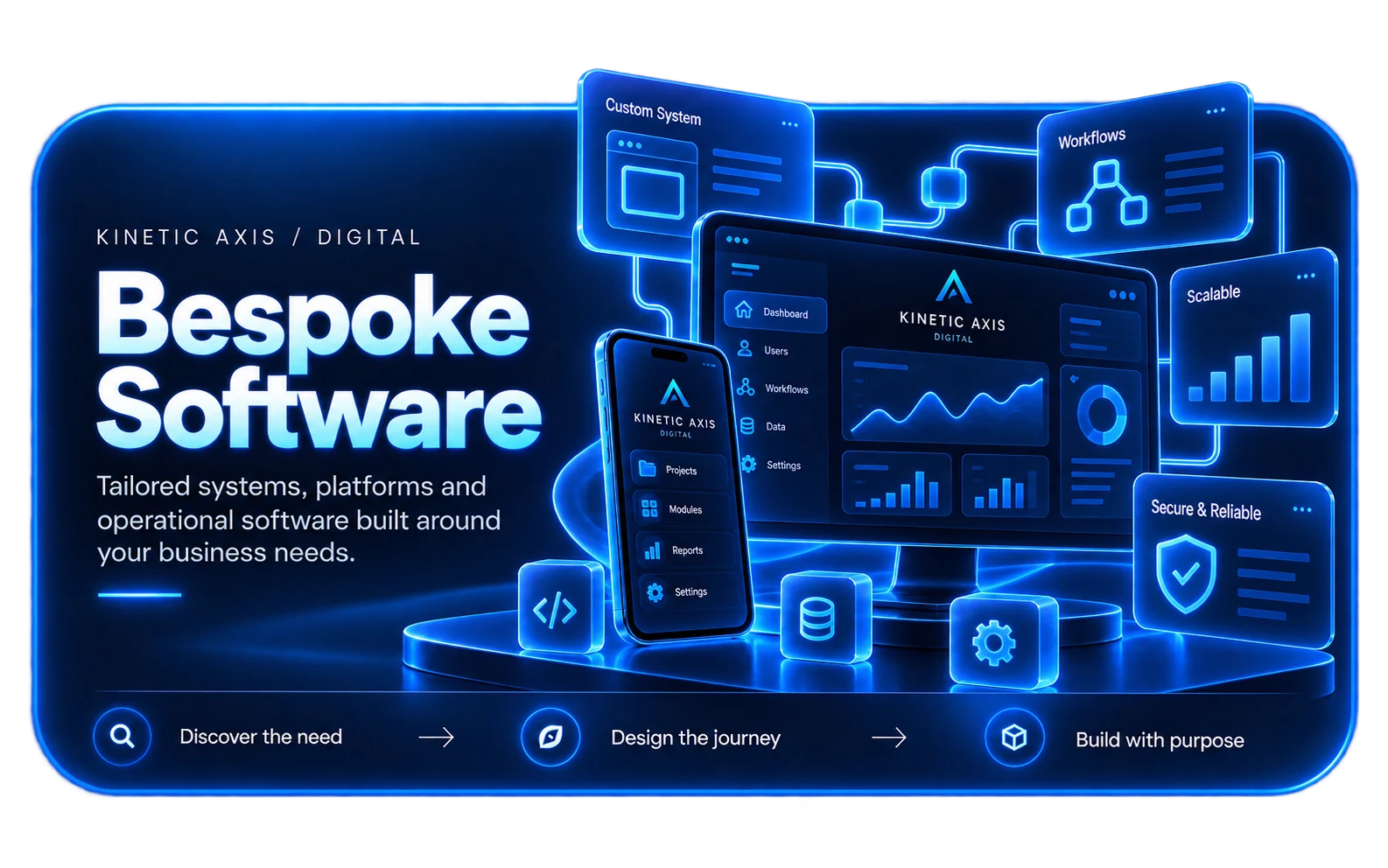
Bespoke business software for teams that have outgrown spreadsheets, disconnected tools or rigid off-the-shelf platforms. We design systems around real workflows, roles and decisions.
WHEN GENERIC SOFTWARE STOPS FITTING
The software should adapt to the operation — not force the operation to adapt.
Business software becomes valuable when it removes friction from work people already do every day. That might mean replacing spreadsheets, bringing several tools into one workflow, reducing repeated data entry or giving teams a clearer view of what needs attention.
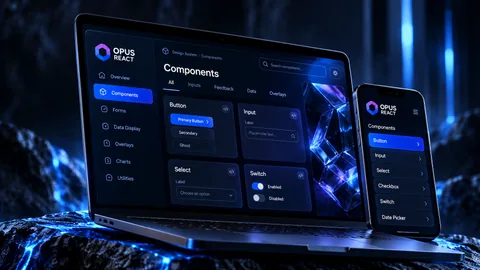
Kinetic Axis also owns OPUS React, our React component library for business applications. Its reusable interface foundations let us focus on the workflows and business rules that make your system useful. We map the process before choosing the architecture. The result can be an internal platform, operational dashboard, workflow system or customer-facing service, but the starting point is always the same: understand the work and make it easier to do well.
How we design and buildWHAT WE CAN BUILD
From operational tools to connected platforms.
The right product can be focused or broad. We shape the scope around the highest-value workflow first.
Operational platforms
Manage day-to-day work, records, statuses and hand-offs in one place instead of across disconnected systems.
Role-based workflows
Give different teams, managers and customers the right actions and information without exposing everything to everyone.
Reporting & dashboards
Turn operational data into useful views that help people understand workload, performance and exceptions.
Connected systems
Integrate existing services, APIs and data sources so the new platform works with the tools the business still needs.
GOOD FIT
Signs bespoke business software may be the right next step.
The strongest projects usually begin with a repeated operational problem rather than a request for a particular technology.
Spreadsheets run the process
Important work depends on files, formulas and manual checks that are hard to control as the team grows.
The same data is re-entered
People copy information between systems because the tools do not share context or ownership.
Off-the-shelf rules get in the way
A generic platform covers most of the job, but the missing 20% creates expensive workarounds.
Visibility is poor
Teams can do the work, but managers struggle to see status, bottlenecks, risk or what needs action next.
HOW WE APPROACH IT
Make the workflow clear before the software gets complicated.
We start with users, operations and outcomes, then design the smallest coherent system that can grow with the business.
Map the workflow
Understand users, hand-offs, data, exceptions and the parts of the current process worth keeping.
Prioritise the first release
Separate essential operational value from features that can wait until real usage proves they are needed.
Design the system
Shape interfaces, permissions, data structures and integrations together so the workflow remains coherent.
Build and evolve
Release in useful increments, observe how the system is used and improve the parts that deliver the most value.
RELEVANT WORK
Experience behind the recommendation.
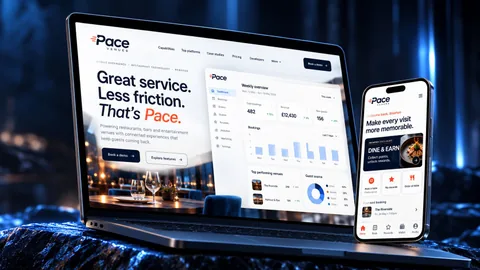
Selected work showing the same kind of product, workflow or platform thinking in practice.
RELATED EXPERTISE
Connected problems usually need connected thinking.
These related capabilities often sit alongside the work on this page.
EXPLORE
Workflow automation software
Reduce repeated manual steps and make hand-offs easier to track.
View capability EXPLOREAdmin dashboard development
Give teams practical tools for managing operations and data.
View capability EXPLORELegacy system modernisation
Replace or progressively modernise software that is holding the business back.
View capabilityCOMMON QUESTIONS
Useful things to know.
What is bespoke business software?
It is software designed around a specific organisation, workflow or operating model rather than a generic product sold to many businesses. The scope can range from a focused internal tool to a wider operational platform.
Do we need to replace every existing system?
Usually not. A new product can integrate with systems that still do their job well. We look for the smallest change that creates a coherent workflow rather than replacing technology for the sake of it.
Can you replace spreadsheets with a proper application?
Yes. Spreadsheet-heavy processes are a common starting point. We first understand what the spreadsheet is really doing — including hidden rules and exceptions — before designing a safer, shared system.
Can the software support different teams and permissions?
Yes. Roles, permissions and auditability can be designed into the product so each user sees the information and actions appropriate to their responsibilities.
Who will I work with?
Kinetic Axis projects are senior-led. Discovery, product decisions and engineering direction stay close to the people doing the work, with direct communication throughout the project.
What happens after launch?
The post-launch model is agreed around the product. Handover, hosting responsibilities, documentation, monitoring, support and further development can be planned before release so there is a clear next step.
WORKING WITH KINETIC AXIS
Senior thinking stays close to the work.
Good delivery is not just the build. It is making the important decisions visible, agreeing responsibilities early and keeping the product useful after launch.
Direct technical and product input
Discovery, design and engineering decisions stay close to the people doing the work rather than passing through layers of account management.
Clarity before commitment
We work through users, workflows, integrations and risk before turning a broad idea into a technical commitment.
Responsibilities agreed up front
Handover, hosting, support, documentation and ongoing development are discussed as part of the project rather than left until launch week.
Useful after launch day
Decisions are made with maintainability, real users and future change in mind — not just how the first release looks in a presentation.
START A CONVERSATION
Ready to replace workarounds with a system that fits?
Start with the process, the people using it and the friction in the current approach. We can turn that into a practical scope.