
The problem with audits.
Most enterprise audits end in a spreadsheet: findings, severities, and nothing actionable. The engagement discussed here — an enterprise SEO, WCAG accessibility and Liferay-powered website review — was shaped to end somewhere more useful: an engineering roadmap split into sprint-sized tickets with effort estimates and a defensible order of attack.
From finding to ticket.
Every finding became an implementation problem framed for the team that owns the build: technical SEO issues scoped as concrete remediation, WCAG accessibility requirements written against the actual components affected, and CMS-specific constraints acknowledged honestly — a fix that's trivial on a bespoke front end can be a structural change on an enterprise CMS template, and pretending otherwise destroys credibility.
Priority by business impact.
Prioritisation balanced reach, risk and effort: which barriers affect the most users or traffic, which carry legal exposure, and which deliver outsized value relative to engineering cost. The result is a plan an enterprise team can pick up and run — not a report that repeats what they already know.
Costed, sized and sequenced.
A roadmap earns trust when each item arrives with realistic effort attached: which findings are a half-day fix, which are a sprint, and which are an architectural conversation to schedule before the next quarter. Even rough sizing converts a list of problems into a plan the engineering team can actually run.
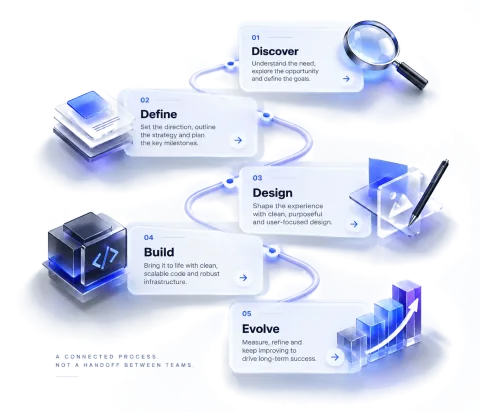
Sequencing matters as much as sizing. Dependency-aware ordering — template fixes before page fixes, structure before content, accessibility remediation with its adjacent SEO wins — means the early items unblock the later ones instead of competing with them.
One backlog, two disciplines.
The quiet breakthrough of this kind of work is running accessibility and SEO as a single backlog. The two share root causes more often than they conflict — heading structure, meaningful link text, contrast, descriptive page titles — so a coordinated plan avoids duplicated effort and contradictory fixes.
For stakeholders, the joint view also reframes budget: the work stops being a compliance cost or a marketing cost and becomes platform maintenance with compounding returns.
What a finding looks like before it is a ticket.
An audit finding is only useful when it arrives complete: the location where it bites, a reproduction anyone can follow, who the affected users are, why it matters commercially, and a suggested fix with its likely appetite. Findings that skip those fields become tickets nobody acts on, which is precisely how audits turn into shelf documents.
The discipline costs a day of writing and saves a month of arguing. Every item in the roadmap carries that provenance, so engineers trust it, stakeholders sponsor it and nobody has to re-litigate the analysis six months later.
Choosing the first sprint.
The opening move of these plans is the first sprint: it sets the team's opinion of the roadmap. The heuristics for choosing them are: maximum visible impact, minimum dependency on other work, and confidence the fix is fully understood. Early wins are not vanity — they buy the credibility the heavier items will need.
Anything requiring architecture decisions lands deliberately later, with its conversation scheduled explicitly. A roadmap that hides its awkward items is a roadmap that stalls on them — sequencing honestly is part of the analysis.
Where teams usually stall.
The predictable failure mode of roadmap work is not bad analysis; it is drift. Ownership blurs, fixes become half-applied, and the backlog returns to being a list of guilt. The countermeasure is structural: every item assigned an owner, a definition of done and a check-in date before the sprint starts, not after it slips.
For enterprise estates, this is exactly the discipline a partner brings: someone whose job is the plan's momentum rather than the plan's righteousness — which tends to be the difference between a roadmap that changes the site and one that changes the org chart.
What this demonstrates.
Audit-driven remediation is a consultancy discipline in its own right. If your organisation has a review sitting in a drawer, that's exactly the work this studio turns into scheduled, estimated engineering — without needing to be the team that built the site.