
Analysis is the cheap half.
A technical analysis tells you where the work is; it doesn't improve anything by itself. The value lands when technical findings — crawlability, structure, accessibility barriers, performance issues — are combined with an accessible, growth-oriented presentation of the digital assets a business already has, and turned into a plan sequenced by impact.
Growth through combined insight.
Businesses rarely suffer from a single technical problem. They suffer from an unresolved pile: SEO issues overlapping with accessibility gaps, slow assets on pages that also have unclear journeys. Combining technical analysis with growth planning stops those being fixed one opinion at a time, and stops the loudest problem being the only one that gets fixed.
The roadmap discipline.
A prioritised improvement roadmap does three jobs: it sequences engineering work so early wins build momentum, it connects each change to an expected outcome so the spend is defensible internally, and it leaves room to re-prioritise as results come in. Technical analysis without that discipline is just documentation.
What combined analysis catches.
Run technical SEO alone and you find crawl waste, duplicate clusters and template bottlenecks. Run an analytics review alone and you find drop-off points and dead pages. Run them in the same analysis and the overlap is where growth actually lives — the high-value pages that cannot rank, the strong rankings diluted by duplicates, the journeys that quietly leak.
That intersection is exactly where a roadmap should start: small, specific fixes that unblock demand which already exists, rather than speculative new content hoping to manufacture it.
Measurement or it did not happen.
Growth plans that do not define measurement are opinions with a deadline. Before recommending anything, we define what success will be seen in — which queries, which pages, which conversion paths — so every later change can be judged rather than argued about.
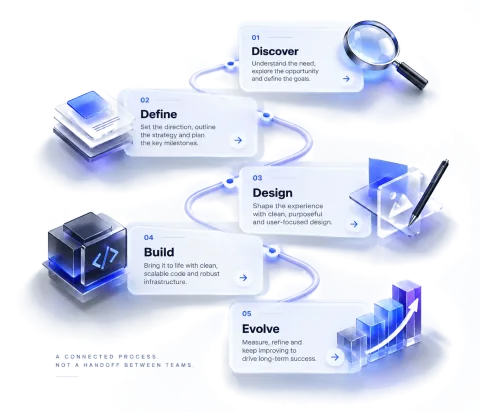
The roadmap discipline grows from there: implement, watch, keep what works, roll back what does not — and let the next round of analysis be sharper because the last one was measured.
Templates decide more than pages.
The highest-leverage fixes in this work are template-level: a navigation pattern repeated on every page, a title template that under-sells hundreds of URLs, a markup structure that crawlers read but assistive technology cannot parse. Page-level patches fight the site one battle at a time; template fixes win the war in one move.
That is why analysis starts at the template layer — one reasoned change there repositions the entire site, while a dozen page edits leave the pattern quietly poisoning everything published tomorrow.
Internal linking is a budget.
Every site distributes a finite amount of authority through its internal links, and most sites spend it like a tab without an owner: homepage links to everything, deep pages linked from nowhere, authority pooling on pages that need no help. Treating linking as a budget — spent deliberately toward the pages that must rank — is one of the highest-return disciplines in technical SEO.
The analysis maps where authority currently pools and where it is needed, and the roadmap reshapes the flow with navigational and contextual links — changes that look editorial and act like plumbing.
The unglamorous wins.
A candid list of what actually moves mid-sized sites: canonical hygiene that consolidates duplicate strength, titles and descriptions repaired at scale, structured data that earns rich results rather than decorating pages, image weights and names repaired at the template, and a sitemap that reflects what the site is proud of rather than what it can house.
None of it makes headlines — which is precisely the point. The most valuable technical SEO work looks dull from the outside and compounds quietly from the inside.
What this demonstrates.
For organisations that have been sold audits before, the difference is execution-readiness: findings that arrive as an ordered, costed plan. That's the standard the studio holds its consultancy work to.