DESIGN SYSTEM DEVELOPMENT
Design systems that keep products coherent.
Create reusable design foundations, interaction rules and component patterns that make complex digital products easier to build, maintain and evolve.
A SYSTEM, NOT A STYLE GUIDE
Make repeated interface decisions once — then make them reusable.
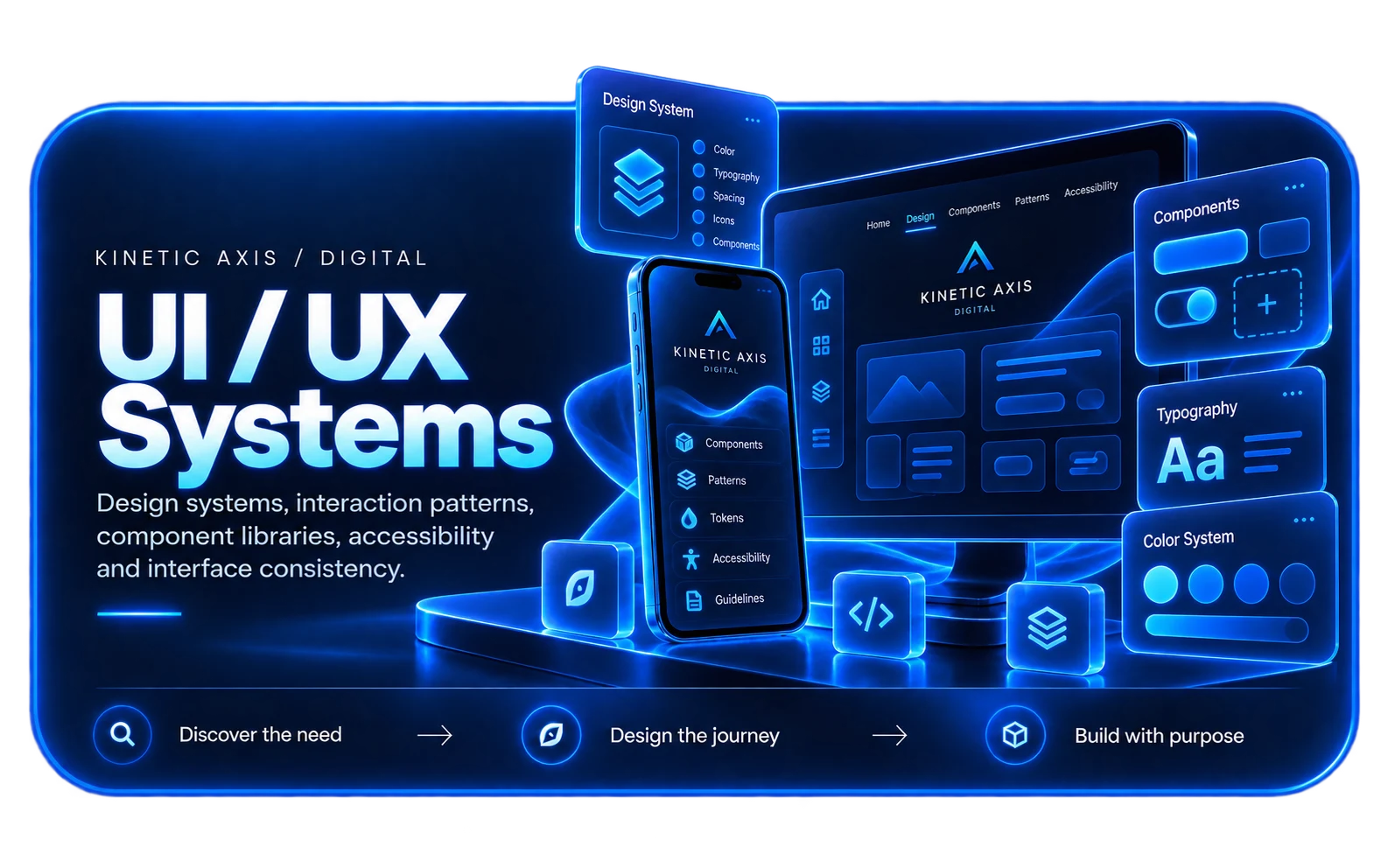
A useful design system connects visual language, interaction behaviour and implementation. It gives teams a shared answer for common product patterns without forcing every screen into the same shape.
We focus on the parts that materially improve delivery: foundations, reusable components, states, accessibility, theming and documentation that designers and developers can actually apply.
How we design and buildDESIGN SYSTEM CAPABILITIES
From visual rules to implementation-ready patterns.
The system should reduce ambiguity for both design and engineering while leaving room for product-specific decisions.
Foundations
Typography, spacing, colour, responsive rules and interaction states that create a consistent product baseline.
Component patterns
Reusable inputs, navigation, overlays, content and data-display patterns shaped around real application needs.
Accessibility rules
Focus, validation, states and interaction behaviour considered as reusable system decisions rather than page-by-page fixes.
Documentation & adoption
Make the system understandable enough that teams can use, extend and maintain it without creating parallel conventions.
WHEN A DESIGN SYSTEM HELPS
Consistency becomes valuable when the product starts to grow.
A design system is most useful when repeated product decisions are already becoming expensive or inconsistent.
Growing SaaS products
Keep new features visually and behaviourally connected as different parts of the application expand.
Multiple product teams
Give designers and developers a shared interface language across parallel workstreams.
Complex business UI
Standardise forms, tables, dashboards and workflow states where small inconsistencies add real friction.
Replatforming work
Use modernisation as an opportunity to remove duplicated UI patterns and establish maintainable foundations.
HOW WE APPROACH IT
Make the workflow clear before the software gets complicated.
We start with users, operations and outcomes, then design the smallest coherent system that can grow with the business.
Understand the workflow
Map users, decisions, data, hand-offs and exceptions before deciding what the software should look like.
Define the product shape
Separate the core outcome from useful extras so the first release is coherent rather than over-scoped.
Design and integrate
Build the interface, data model and integrations together so the product behaves as one system.
Release and evolve
Use real operation and customer feedback to decide what should be improved, automated or expanded next.
RELEVANT WORK
Experience behind the recommendation.
Selected work showing the same kind of product, workflow or platform thinking in practice.
RELATED EXPERTISE
Connected problems usually need connected thinking.
These related capabilities often sit alongside the work on this page.
EXPLORE
React component library development
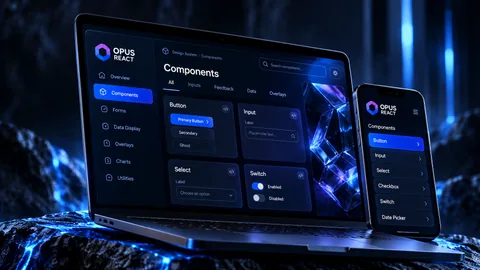
Turn reusable interface patterns into a practical implementation layer for product teams.
View capability EXPLOREEnterprise UI development
Design dense operational interfaces around workflow, information and repeat use.
View capability EXPLOREUI/UX & design systems
Broader interface and experience design across new and existing products.
View capabilityCOMMON QUESTIONS
Useful things to know.
What is included in a design system?
The exact scope depends on the product, but typically includes visual foundations, reusable components, interaction states, accessibility rules and documentation.
Do we need to rebuild our whole interface?
No. A design system can be introduced incrementally, starting with the patterns that create the most repetition or inconsistency.
Can the system support light and dark themes?
Yes. Theme behaviour can be designed into tokens and components so visual modes remain consistent rather than becoming separate implementations.
Can you work with an existing component library?
Yes. We can audit what already exists, identify duplication or gaps, and improve the system without discarding useful foundations.
Who will I work with?
Kinetic Axis projects are senior-led. Discovery, product decisions and engineering direction stay close to the people doing the work, with direct communication throughout the project.
What happens after launch?
The post-launch model is agreed around the product. Handover, hosting responsibilities, documentation, monitoring, support and further development can be planned before release so there is a clear next step.
WORKING WITH KINETIC AXIS
Senior thinking stays close to the work.
Good delivery is not just the build. It is making the important decisions visible, agreeing responsibilities early and keeping the product useful after launch.
Direct technical and product input
Discovery, design and engineering decisions stay close to the people doing the work rather than passing through layers of account management.
Clarity before commitment
We work through users, workflows, integrations and risk before turning a broad idea into a technical commitment.
Responsibilities agreed up front
Handover, hosting, support, documentation and ongoing development are discussed as part of the project rather than left until launch week.
Useful after launch day
Decisions are made with maintainability, real users and future change in mind — not just how the first release looks in a presentation.
START A CONVERSATION
Need a product interface that can grow without drifting apart?
Share the journeys, screens or design-system problems you want to improve and we can work through the right next step.