ECOMMERCE & MARKETPLACES
Digital commerce with discovery built in.
Create online buying and selling experiences where category structure, search, product information and account journeys work together rather than competing for attention.
BEYOND CHECKOUT
Commerce starts before the basket.
People need to understand what is available, narrow down choices and trust the information they find long before they reach checkout. That makes information architecture, category design, search and product detail part of the commercial system.
Our work on marketplace and product experiences looks at the whole path from discovery to action, including the operational tools needed to maintain content, categories and listings behind it.
How we design and buildCOMMERCE CAPABILITIES
Shape the experience around how people actually browse and buy.
The right combination depends on catalogue complexity, transaction model and whether the platform serves one seller or many.
Information architecture
Organise categories, attributes and navigation so the catalogue makes sense before users search.
Search & filtering
Help users narrow large sets of options with relevant filters, sorting and result context.
Product & listing UX
Present enough information to support confident action without burying the important decision points.
Operational tooling
Give teams practical ways to manage catalogue data, listings, status and content quality behind the storefront.
COMMERCE MODELS
Different models create different product priorities.
A marketplace, retailer and specialist catalogue may all use commerce patterns, but their operational models are not the same.
Marketplaces
Serve buyers, sellers and platform operators through one connected product and data model.
Specialist ecommerce
Make complex or considered products easier to explore through better category and product information.
Recommerce
Support listings, condition, seller information and trust where products come from many individual sources.
Catalogue-led platforms
Create searchable product or service catalogues where enquiry or offline fulfilment matters more than conventional checkout.
HOW WE APPROACH IT
Make the workflow clear before the software gets complicated.
We start with users, operations and outcomes, then design the smallest coherent system that can grow with the business.
Understand the workflow
Map users, decisions, data, hand-offs and exceptions before deciding what the software should look like.
Define the product shape
Separate the core outcome from useful extras so the first release is coherent rather than over-scoped.
Design and integrate
Build the interface, data model and integrations together so the product behaves as one system.
Release and evolve
Use real operation and customer feedback to decide what should be improved, automated or expanded next.
RELEVANT WORK
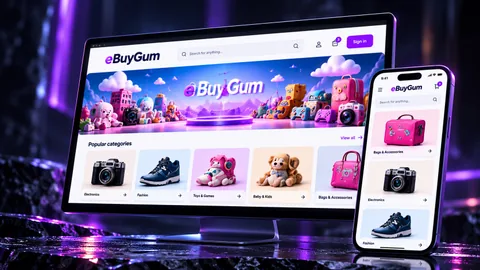
Experience behind the recommendation.
Selected work showing the same kind of product, workflow or platform thinking in practice.
RELATED EXPERTISE
Connected problems usually need connected thinking.
These related capabilities often sit alongside the work on this page.
EXPLORE
Marketplace development
Design the buyer, seller and operator sides of a two-sided platform.
View capability EXPLOREWeb app development
Build interactive account, search and operational workflows in the browser.
View capability EXPLORECustomer portal development
Create repeat-use account areas around orders, listings or customer activity.
View capabilityCOMMON QUESTIONS
Useful things to know.
Can you redesign an existing ecommerce or marketplace experience?
Yes. Discovery, navigation, category structure and account workflows can be improved without necessarily replacing every underlying system at once.
Can the platform support multiple sellers?
Yes. That changes the product model significantly because seller onboarding, listings, moderation, account state and platform operations all become part of the experience.
Do you build search and filtering interfaces?
Yes. We design the information structure and search/filter experience around the data actually available rather than adding generic filters that do not help users decide.
Can ecommerce connect to existing APIs or business systems?
Yes, where those systems provide suitable interfaces. Integration planning should happen early because product availability, pricing, customer data and fulfilment can affect the user experience.
Who will I work with?
Kinetic Axis projects are senior-led. Discovery, product decisions and engineering direction stay close to the people doing the work, with direct communication throughout the project.
What happens after launch?
The post-launch model is agreed around the product. Handover, hosting responsibilities, documentation, monitoring, support and further development can be planned before release so there is a clear next step.
WORKING WITH KINETIC AXIS
Senior thinking stays close to the work.
Good delivery is not just the build. It is making the important decisions visible, agreeing responsibilities early and keeping the product useful after launch.
Direct technical and product input
Discovery, design and engineering decisions stay close to the people doing the work rather than passing through layers of account management.
Clarity before commitment
We work through users, workflows, integrations and risk before turning a broad idea into a technical commitment.
Responsibilities agreed up front
Handover, hosting, support, documentation and ongoing development are discussed as part of the project rather than left until launch week.
Useful after launch day
Decisions are made with maintainability, real users and future change in mind — not just how the first release looks in a presentation.
START A CONVERSATION
Planning a commerce experience where discovery matters as much as checkout?
Tell us what people need to do, where the friction is today and what a better result would look like.