BESPOKE SOFTWARE / WARWICKSHIRE
Bespoke software development for Warwickshire businesses.
Custom operational software for Warwickshire organisations replacing manual processes, connecting systems or modernising software that no longer fits the business.
A FOCUSED REGIONAL SERVICE
For organisations that have outgrown spreadsheets, workarounds or rigid software.
This page focuses specifically on bespoke business software in Warwickshire. For broader web, mobile and integration capability, our regional overview covers the wider product offering.
The practical question is whether the workflow is important enough that better-fitting software would reduce friction, improve service or make change easier. We start there, then decide what should be automated, integrated or rebuilt.
How we design and buildBESPOKE SOFTWARE CAPABILITY
Software designed around the roles, rules and data that make the business work.
We can start with one critical workflow or shape a broader operational platform in stages.
Process-led applications
Turn repeat operational workflows into clear states, actions, ownership and auditability.
Back-office systems
Bring records, tasks, exceptions and reporting into interfaces built around operational roles.
Integration & automation
Reduce repeated manual transfer by connecting the systems that already matter to the business.
Modernisation
Improve or replace ageing software in controlled stages rather than forcing a risky big-bang rewrite.
WHEN CUSTOM SOFTWARE EARNS ITS KEEP
The strongest case is usually a business problem, not a feature wish list.
Bespoke development is worth considering when the cost of workarounds, delay or inflexibility is becoming material.
Critical work lives in spreadsheets
Create a safer operational system while preserving the useful flexibility teams rely on.
Generic software creates workarounds
Design the product around the organisation’s actual rules instead of adapting the organisation to the tool.
Systems do not share data
Connect important services and reduce duplicate entry, reconciliation and uncertainty.
Legacy software is hard to change
Create a staged modernisation plan that protects continuity while improving the product foundation.
HOW WE APPROACH IT
Make the workflow clear before the software gets complicated.
We start with users, operations and outcomes, then design the smallest coherent system that can grow with the business.
Find the operational constraint
Understand where time, risk or service quality is being lost today.
Model the workflow
Define roles, states, data, rules and exceptions before designing screens.
Build the useful core
Deliver the smallest coherent system that materially improves the process.
Expand deliberately
Add automation, reporting and connected workflows as evidence shows where they create value.
RELEVANT WORK
Experience behind the recommendation.
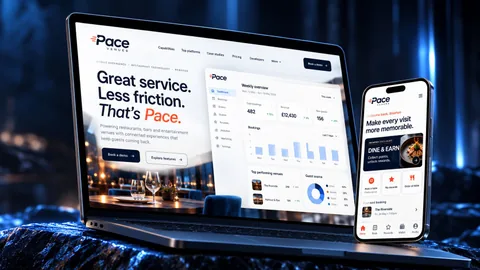
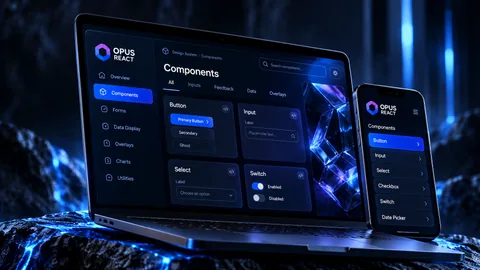
Selected work showing the same kind of product, workflow or platform thinking in practice.
RELATED EXPERTISE
Connected problems usually need connected thinking.
These related capabilities often sit alongside the work on this page.
EXPLORE
Bespoke software development
Explore our broader custom software service.
View capability EXPLORESoftware & web apps in Warwickshire
See the wider regional product and engineering capability.
View capability EXPLOREReplace spreadsheet workflows
Explore a focused route for spreadsheet-led operations.
View capabilityCOMMON QUESTIONS
Useful things to know.
Do you only build large bespoke systems?
No. A useful first release can focus on one valuable workflow and expand only when the business case is clear.
Can bespoke software replace several spreadsheets?
Yes. We first identify what the spreadsheets are actually doing — data storage, workflow, calculations, approvals or reporting — before designing a safer replacement.
Can you integrate with software we need to keep?
Yes. Bespoke software does not require replacing everything. Existing platforms can remain where they work well and be connected where practical.
Do you work outside Warwickshire?
Yes. Kinetic Axis works with organisations across the UK. Warwickshire is our local regional route.
Who will I work with?
Kinetic Axis projects are senior-led. Discovery, product decisions and engineering direction stay close to the people doing the work, with direct communication throughout the project.
What happens after launch?
The post-launch model is agreed around the product. Handover, hosting responsibilities, documentation, monitoring, support and further development can be planned before release so there is a clear next step.
WORKING WITH KINETIC AXIS
Senior thinking stays close to the work.
Good delivery is not just the build. It is making the important decisions visible, agreeing responsibilities early and keeping the product useful after launch.
Direct technical and product input
Discovery, design and engineering decisions stay close to the people doing the work rather than passing through layers of account management.
Clarity before commitment
We work through users, workflows, integrations and risk before turning a broad idea into a technical commitment.
Responsibilities agreed up front
Handover, hosting, support, documentation and ongoing development are discussed as part of the project rather than left until launch week.
Useful after launch day
Decisions are made with maintainability, real users and future change in mind — not just how the first release looks in a presentation.
START A CONVERSATION
Planning bespoke software in Warwickshire?
Start with the process, the people using it and the friction in the current approach. We can turn that into a practical scope.